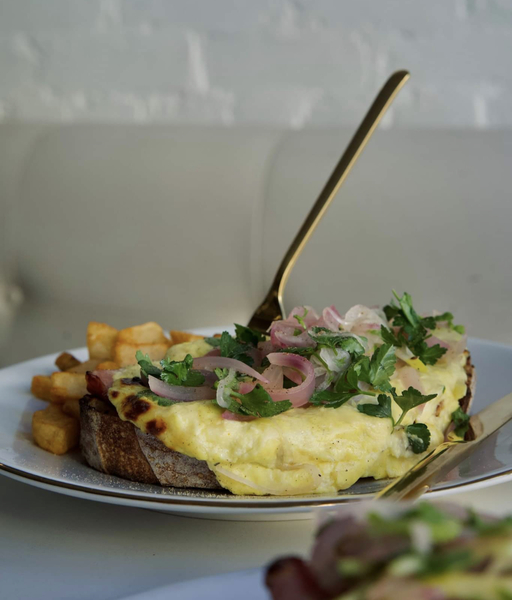
You can’t talk about Mile End gastronomy without talking about Montréal’s Jewish and Eastern European heritage. It is the centre of the emblematic institutions of this legacy in the city, where immigrant Jews, most of them from Eastern Europe, brought us the bagel, the smoked meat sandwich and cured sausages in the early 20th century. In Mile End you’ll find the two temples of bagels that are Fairmount Bagel and Saint-Viateur Bagel. The story goes that the Montréal bagel is sweeter and more delicate than its New York cousin, a probable result of adapting to local taste. Try out a sausage sandwich at Wilensky’s on Fairmount Street. Smoked meat fans will definitely want to wait in line to try Montréal’s famous smoked meat sandwiches at the restaurant Schwartz on St-Laurent, just south of the Mile End.
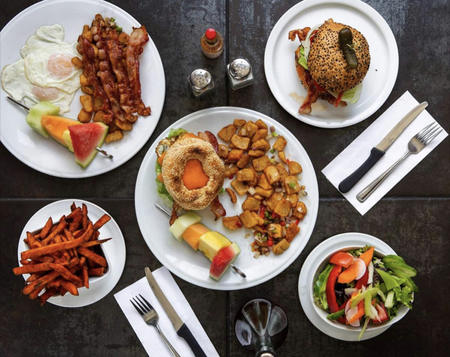
The specialties of bagels and sandwiches associated with the Mile End neighbourhood are most probably linked to its being a favoured brunching destination. This tradition has been well established by the restaurant Beauty’s on Mont-Royal Avenue, where bagels are a specialty. Restaurants such as B & M or Fabergé, located on St-Viateur and Fairmount respectively, offer their own updated version of the Mile End brunch. The Syrian restaurant Kazamaza on Parc Avenue even proposes a Middle Eastern version of it.
The multiethnic character of the neighbourhood is, of course, also reflected in the more refined eateries of the area, with some fine cuisine from all sides of the Mediterranean basin. In the intimate décor of bistro Barcola on Parc Avenue, you will discover authentic Northern Italian cuisine. At the limits of Outremont on the corner of Van Horne and Hutchison, the Caffé Della Pace prepares a variety of Italian coffees and offers healthy, homemade vegetarian dishes composed of fresh ingredients. The prices are very reasonable and the atmosphere is friendly, with a piano in one corner and sofas in another. Both families with children and queers rub shoulders here. The fancy bistro Chez Lévêque on Laurier West has remained a very popular spot for the past 45 years. There is a humorous, slightly irreverent tone here, and a religious theme is displayed in reference to the patronymic of chef and co-owner Pierre Lévêque (L’évêque meaning Bishop). This chic Parisian brasserie with a distinctive Montréal touch has never deviated from the concept that made its success: good food and wine, in a trendy but casual ambiance. Their “faim de soirée” menu becomes available after 9pm, with more affordable prices attracting a younger clientele.
Of course, this neighbourhood’s culinary spectrum is much larger than what we can possibly cram into this page, and Local Montréal Tours can design customized gourmet tours that allow for rich and diverse Mile End discoveries.
In the estuary of the Restigouche River, at the end of Chaleur Bay, lies the national historic site of the Battle of the Restigouche, 3 km west of the municipality of Pointe-à-la-Croix. This historic site commemorates the last naval battle of the Seven Years' War between the French and English for possession of New France…
But it was also near this site, to the east of Pointe-à-la-Croix, that over a thousand Acadians fleeing deportation took refuge, in what was called in 1758 the village of Petite-Rochelle. At the time of the fall of Quebec in September 1759, the village was only defended by a fortified post and a handful of soldiers. Under the English threat, this Acadian refuge was nevertheless the last French bastion to capitulate. Here's why…
The last naval battle
At the end of May 1760, the Petite-Rochelle post received unexpected aid. The winter had been harsh, and the population had suffered greatly from famine. A French flotilla commanded by Lieutenant François Chenard de La Giraudais took refuge at the end of Chaleur Bay. Comprising the frigate Le Machault and two supply ships loaded to aid Canada, they had preferred to avoid encountering a larger English fleet that preceded them at the entrance of the Saint Lawrence River. On June 27, the three French ships were trapped by an English fleet of five warships commanded by Captain John Byron, who engaged in battle. The defense of the Petite-Rochelle post, however, was organized and supported by Acadian militiamen and Mi'kmaq warriors. François-Gabriel d’Anjeac, captain of the troops aboard the French ships, had taken command of the post and directed the construction of a battery and a guard post at Pointe-à-la-Garde (east of Pointe-à-la-Croix). This battery caused real damage to the English and delayed their progression towards the French ships. But the fight was uneven…
Estuary of the Restigouche River and Van Horne Bridge
Estuary of the Restigouche River and Van Horne Bridge connecting Campbellton to Pointe-à-la-Croix, viewed from Sugarloaf Mountain, New Brunswick. It is here that remains of the Machault still lie at the bottom of the river (author Blob5825, unmodified, license CC BY 1.0)
On July 8, at the end of a fierce battle, La Giraudais scuttled his ships to prevent the English from seizing the supplies and weapons. Quickly, Captain d’Anjeac led the retreat of his troops into the woods. However, the English fleet preferred to withdraw. Thus ended the battle of the Restigouche. The English had burned all the houses they found on the shore. The disaster was total. D’Anjeac still managed to organize the resistance of the Petite-Rochelle post, which still sheltered a thousand Acadian refugees. It was in vain… The French troops had to lay down their arms on October 30, after the capitulation of Montreal. The Acadians were left in place, plunged into great uncertainty, which did not prevent the Acadian privateers from continuing a relentless privateering war against the English boats. Several families had still managed to flee along Chaleur Bay and had founded the village of... Bonaventure.
By Gaëtan Vaudry
Tadoussac is arguably one of the most beautiful summer tourist regions in Quebec. However, this North Shore region is much quieter in winter. Fortunately, thanks to our friends at Chalets-camping Domaine des Dunes, it is possible to have very pleasant moments there, even in the winter season!
Located between the tourist village of Tadoussac and the famous Dunes (two huge marine sand terraces exposed by the last ice melt about 10,000 years ago), the Domaine des Dunes site, nestled in a birch forest, is simply enchanting. It offers both camping and chalet rentals that can accommodate up to six people, as well as the rental of a kamook and even a wooden tipi... nothing less! "We resume service in winter, to the delight of our customers," says co-owner Bernadette Roduit Bender, with a broad smile. "The experiences in kamook and tipi are done in camping styles, that is, with access to a sanitary facility with toilets and showers, washer and dryer, as well as a community room."
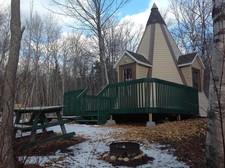
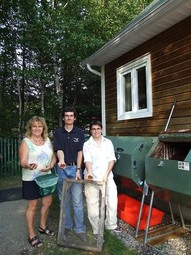
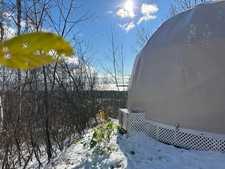
Several activities are available even in winter at Domaine des Dunes, including a highly appreciated welcome for snowmobile enthusiasts in the boreal forest, trails for snowshoeing and cross-country skiing. In summer, the region abounds with activities, including whale watching cruises, black bear observation, sea kayaking, marine mammal interpretation center, the region's fine dining, and much more.
Bernadette, who is joined by her daughter and son for all aspects of Domaine des Dunes, has worked very hard in recent weeks to welcome you this winter. During my short visit to Tadoussac at the end of November, the family was busy making final adjustments to welcome numerous clients for the beautiful winter season. Moreover, Bernadette and her team invite you to book your chalet, kamook, or wooden tipi for the holiday season before December 10th. They even promise a nice surprise!
Domaine des Dunes (Chalets-camping)
585, Chemin de la Rivière-du-Moulin-à-Baude
Tadoussac
418 235-4843
domainedesdunes.com