
Travel log

coucher du soleil

Archive for November 2025


By Gaëtan Vaudry
Photo: Héliotrope Editions

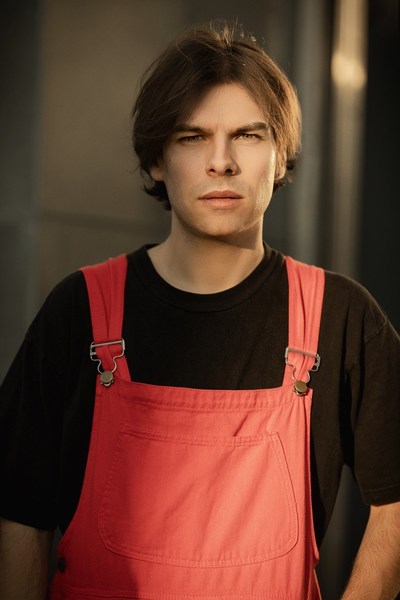
At just 31 years of age, his name is already on everyone's lips. Born in Montreal, but a Chicoutimi adoptee by choice, Kevin Lambert is a prolific author collecting the most prestigious awards.

His mantelpiece is already overflowing with numerous accolades, including the best thesis in Arts and Humanities from the University of Montreal, the Pierre L'Hérault Emerging Critic Award, the Discovery Award at the Saguenay−Lac-Saint-Jean Book Fair, the Sade Prize, the CALQ (Quebec Council of Arts and Letters) Prize, the Ringuet Prize, the December Prize, and the 2023 Médicis Prize... to name a few!

Graduating from the University of Montreal with a master's and a doctorate, the writer published his first novel You Will Love What You Have Killed in 2017. In this story set in an unhealthy and morbid Chicoutimi, Kevin Lambert uses hatred as a literary tone and sharply criticizes the xenophobia and homophobia that still prevails in Quebec. The young man already managed to turn many heads, mainly those in the Quebec literary scene. This success set the stage for his second novel, Querelle of Roberval, published a year later. This work - renamed Querelle by his French publisher - narrating the struggle of the workers at the Roberval sawmill against their employer, received a multitude of awards and acknowledgements, propelling Kevin Lambert's name beyond our borders.
KLAMBERT2

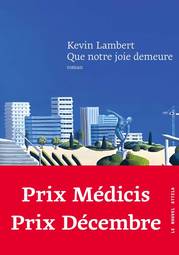
Many will remember that in July 2023, Kevin Lambert did not appreciate Quebec's Prime Minister, François Legault, highlighting his latest work Let Our Joy Remain on Twitter. The author fiercely replied to the CAQ leader's literary critique on social media: "Mr. Legault, in the midst of a housing crisis, while your government works to undermine the last bastions protecting us from extreme gentrification in Montreal, promoting my book is pitiful (...) What bothered me was not so much the fact that he reads books that are far from his political ideas or echo chamber, but the interpretation he made of my book in the context of the housing crisis." The two men would subsequently exchange a few messages.

Openly gay, Kevin Lambert, in an interview with La Presse and director René-Richard Cyr in 2021, asserts his desire to contribute to the homosexual affirmation movement in his works: "I like being part of the LGBTQ category," he emphasizes. According to him, the cultural industry imposes changes, adjustments: "Categories don't bother me at all. It's a big machine, the cultural industry, it takes time to move, but it moves.

On November 9, 2023, Kevin Lambert received the Médicis Prize for Let Our Joy Remain, a French literary award established in 1958, intended to honor a novel, a narrative, a collection of short stories, by an author who is beginning or does not yet have a reputation corresponding to their talent. The Médicis comes with a prize of 1000 euros, roughly less than 1500 dollars.
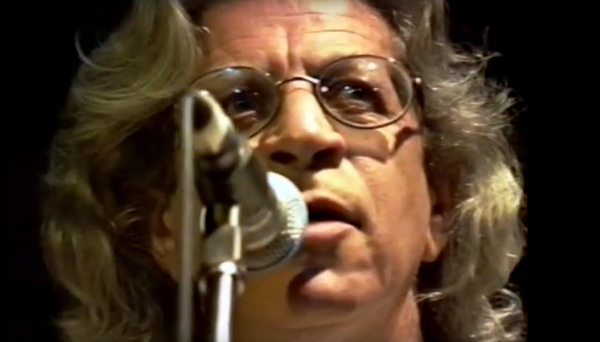
According to many, Gérald Leblanc was a poet of youth and urbanity. On May 30, 2005, the artist succumbed to a long battle with cancer at the age of 59. Originally from Bouctouche, he influenced Acadian cultural life in numerous ways.

Acadia lost one of its most illustrious poets, for whom the search for personal roots served as a springboard for a fundamentally Acadian voice. His poetic language is that of "chiac," the dialect of southeastern New Brunswick, of which Leblanc was the undisputed champion. His poetic voice, rich and abundant, proudly asserts itself without seeking any external validation.

 
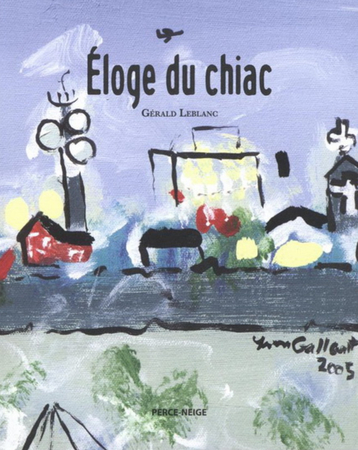
Éloge du chiac Gérald Leblanc
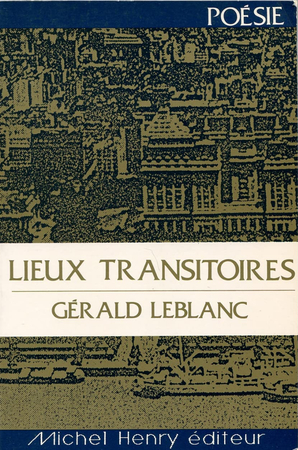
Author of an anthology of Acadian poetry, he stimulated other voices. His poetry poses the following question: "What is Acadian identity?" His literary work is immense, with multiple themes. In 1986, the author celebrated the absolute of love in "Lieux transitoires" and took the opportunity to affirm his homosexuality.

Lieux Transitoires Gérald Leblanc

He led Éditions Perce-Neige in Moncton, a publishing house dedicated to new Acadian literature, from 1991 until his death. During this period, he organized numerous literary evenings and meetings. He was also one of the main lyricists for the group 1755, which made a splash in the 70s. He is credited with several Acadian song classics, some of which were covered by Marie-Jo Thériault.

This prolific and committed man of letters also shared on several occasions what inspired and shocked him. In a long correspondence (Lettres à mon ami américain 1967-2003) maintained with his cousin Joseph Olivier Roy, an American teacher of Acadian origin, comprising 161 letters written over 36 years, he shared his interest in literature and his personal evolution alongside that of Acadia over the years.

He also addresses elements that reveal much about his personality: "Alcoholics, whores, religious fanatics, homosexuals, etc. I have very, very vicious blood flowing through my veins; I have a heritage full of passion, hatred, debauchery, and sin (note that I do not say LOVE, finally, funny race)."

Leblanc states that he has "always loved writing letters" and that Roy was just one among his many correspondents of that time: " […] about fifteen people, ten 'Gay boys,' one lesbian, a few others of these 'normal' beings over the last ten years, if we collected all my correspondence, there would be enough to fill at least 2,000 volumes."

Rodrigue Jean's feature-length documentary "L’extrême frontière" (2006) at the NFB celebrates poet Gérald Leblanc. Combining wandering and belonging, this child of the Beat Generation lived far from all taboos and propelled Acadia into modernity. The film was released a year after the poet's death.

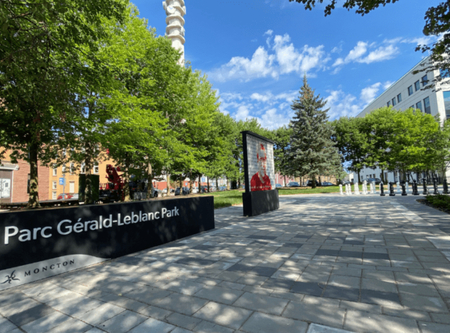
In 2020, at the initiative of two university professors, the City of Moncton inaugurated a park now bearing his name right in front of the city hall.

Parc Gérald-Leblanc Moncton

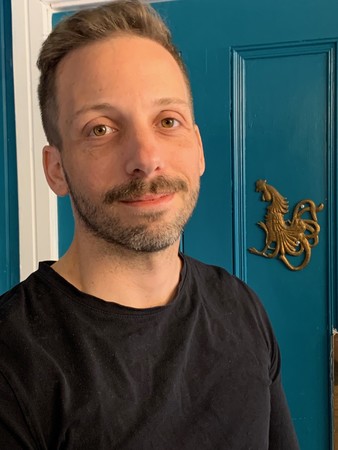
Early one morning in early May, over coffee at Adorable Chocolat in Shediac, Acadia, his hometown, Julien Cadieux agrees to share a portion of his already extensive experience as a filmmaker, screenwriter, director, and editor.

Cadieux
Quickly, the issue of inclusion arises and almost becomes the central point of this interview. Because for him, that's what motivates his work as a filmmaker: giving voice and exposing the experiences of people who face issues related to their identity, origins, sexuality, interactions with institutions and organizations, social justice, among others.

 
Since 2008, after studying film at Concordia University in Montreal, he has taken on numerous projects and productions, some of which have been awarded and have been highly successful among various communities. "Cinema in Acadia has a real impact on the community. People need to see themselves in cinema. That's what drives me first in my productions," he assures.

Cadieux
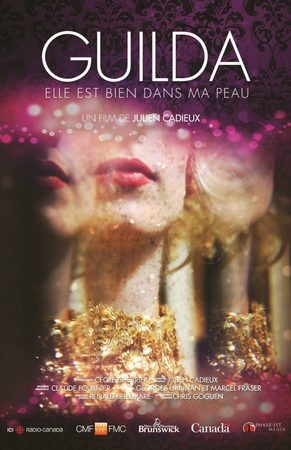
He has personally scripted, edited, and directed a dozen productions, most related to Acadian subjects, the best known of which are Y'a une étoile (2023), Daniel Le Tisserand (2023), Farlaques (2021), Métisser une rivière (2020). In Quebec, his documentary Guilda: elle est bien dans ma peau (2014) about this famous Montreal transformist artist of French origin, a true pioneer of sexual diversity for sixty years.

 
Many of these films have been awarded at film festivals here and elsewhere, in Quebec, Canada, and even in France and the United States. It is particularly his queer-themed films that receive greater visibility and recognition. Precisely because they give voice to or highlight specific situations related to members of various LGBT communities.
Julien Cadieux has also contributed to the editing and scripting of about twenty other film or video productions since 2006.

Cadieux With Dan Robichaud, from the film Daniel Le Tisserand


Is there a queer life outside of big cities? To this question, Julien Cadieux responds that it is possible, but that various constraints may discourage those who wish to continue their life in rural areas, for example in Acadia, where LGBT-friendly healthcare services are almost non-existent. Many therefore choose to leave the regions to live in urban areas, such as Moncton, even though not everything is easily accessible there. These are the kinds of issues he addresses in several of his documentaries.


The issue of inclusion particularly interests him. In this context, he is soon to undertake a film about an immigration project in the Cap-Pelé region where many temporary foreign workers from Mexico, Jamaica, and the Philippines, among others, face difficult inclusion situations. The case of LGBT individuals among them is also of concern, according to Julien Cadieux.

Cadieux 
In his film "Y'a une étoile," we meet Samuel Leblanc, a young transgender musician, who embarks on a journey with his friends from the band Écarlate through the work of Acadian artist Angèle Arseneault. Originally from a small village, Samuel has long questioned his queer identity and cultural identity. Through his double minority and the journey of young people like him, we discover that despite the obstacles, "there is a star for each of us."


This film is a very frank evocation of what Julien Cadieux wishes to demonstrate and present in his documentary cinema, in connection with Acadia, queer identity, the reality of the arts that fascinates him, and the human encounters he makes throughout his journey.

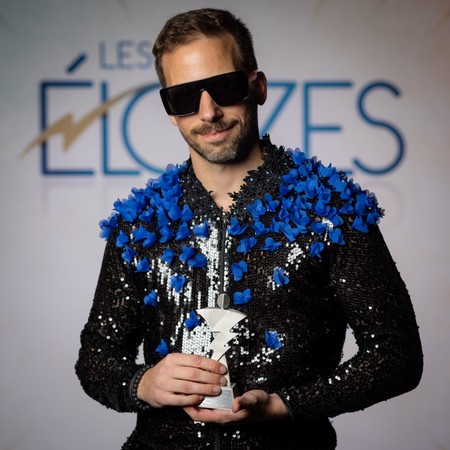
It should be noted that Julien Cadieux was named "Artist of the Year in Media Arts," specifically for the film Y'a une étoile at the Les Éloizes 2024 ceremony, the annual gala of the Association acadienne des artistes professionnel.le.s du Nouveau-Brunswick, in Shediac last Sunday, May 12.

Cadieux Cadieux

Julien Cadieux, filmmaker
Shediac, NB
facebook.com/julien.cadieux


By Gaëtan Vaudry
Photo: Facebook

Summer 2024 will see the release of " The Chef and the Customs Officer ", the new film by Baie-Comeau filmmaker Manon Briand. It will have been 10 years since her last work, " Liverpool ", released in 2012. In an interview with journalist Maxime Demers of the Journal de Montréal, Manon Briand explains that this is the fifth script she has worked on over the past decade and it’s the one that finally led to filming.

The new film by the director of "La Turbulences des Fluides" tells the story of a fame-seeking French chef who tries to help a child win a culinary contest. However, he must face the hostility of an entire village towards the child's mother, the uncompromising local customs officer. The lead role in this comedy was given to French actor Édouard Baer, known for his role as Astérix in "Astérix and Obélix: God Save Britannia". He is well supported by Julie Le Breton, Sylvain Girard, Normand Chouinard, Michèle Deslauriers, and Dominic Paquet: "I treated myself. I included everyone I love", notes the director in the interview.

In 2003, Manon Briand received 4 nominations at the Jutra Awards (now the Iris Awards), including Best Screenplay, for her masterpiece "La Turbulences des Fluides". A decade later, she won the Women in Film and Television Artistic Merit Award at the Vancouver festival, for her feature film "Liverpool".

Sexual Ambiguity

A graduate of Concordia University in Fine Arts, majoring in film, Manon Briand captures the pulse of her generation of trendy urban gays, lesbians, bisexuals – and even heterosexuals – for whom sexual identity is a matter of the heart, in her first work "Les Sauf-Conduits" in 1991, a short film starring Luc Picard and Patrick Goyette. With her first feature film "2 Seconds", the filmmaker presents a deftly crafted melodrama about a washed-up lesbian cyclist who thrives as a bike courier in the worn streets of Montreal. Charlotte Laurier, Dino Tavarone, Yves P. Pelletier, and Suzanne Clément star in this 1998 film.

In the early 2000s, "Heart—The Marilyn Bell Story", an English-language television biography about Toronto marathon swimmer Marilyn Bell, starring Caroline Dhavernas, allowed Briand to hone her directing skills, as well as to further explore her interest in female bodies, athletic challenges, and sexual ambiguity.

Needless to say, the free encyclopedia Wikipedia categorizes Baie-Comeau's Briand in the category "Canadian female directors whose work is marked by LGBTQ themes".

Serge Bruyère

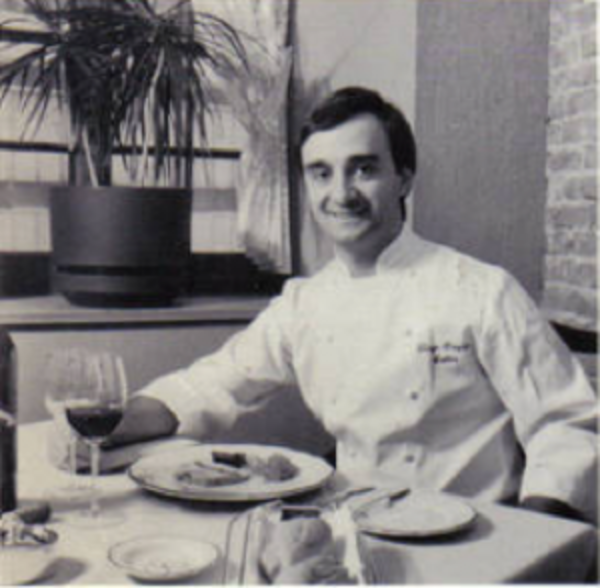
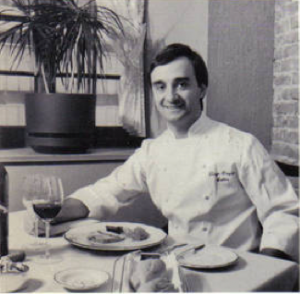
A native of Lyon in France, Serge Bruyère fell in love with the city of Québec from his very first visit in 1976. He immigrated to its province during the Montréal Olympic Games, working at the Queen Elizabeth Hotel before moving to Québec city. Prior to leaving his native country, he had undergone his training in the kitchens of l’Auberge du Tunnel in Auvergne with Paul Bocuse and the Troisgros brothers. He first worked at the Hilton before becoming executive chef at the Éperlan restaurant. One year later, he founded the Marie-Clarisse restaurant near the Breakneck Stairs (l’Escalier Casse-cou) with another partner. In 1980, he undertook a new adventure at the Maison Livernois on Saint-Jean Street, this time on his own: Serge Bruyère’s restaurant À La Table was created. He was among the very first chefs to work closely with local craftsmen in order to obtain high quality products for his menu. Serge Bruyère died prematurely in 1994 at the age of 33. His heritage is considered enormous: he introduced an updated version of haute cuisine, laying the foundations of a gastronomy concerned with great quality and based on a relationship of proximity with his suppliers. Throughout the 14 years of existence of À La Table, Bruyère devoted time and energy in training dozens of competent chefs like Daniel Vézina, Jean Soulard and Marie-Chantale Lepage, who to this day remain inspired by his culinary philosophy.

His passion for gastronomy as well as his devotion to the recognition of the trade were immense. He knew how to transmit his enthusiasm and the importance of working with precision, and also to respect clients and producers. Bruyère is one of only two Québec chefs to be included in the Larousse gastronomique lexicon, and was the first to introduce new cuisine to the city.

He was a humble, sympathetic and respected chef. His passion for quality produce and his unfailing technique and hard work, along with the sharing of his knowledge were of utmost importance to him. The Fondation Serge Bruyère, which is dedicated to the encouragement of Québec’s new culinary talent, serves to perpetuate his legacy.

Glenn-Crawford

Glenn Crawford was the instigator of the Build Our Bank and LGBT Village initiatives in the famously reserved capital since starting the volunteer-run project in 2007. While he has recently stepped down as president of The Village, making room for new ideas from successor Ian Capstick, Crawford has left an indelible mark on a town where there wasn’t a lot of consensus about creating a gay village.

Born out of town hall meetings about the reconstruction of Bank Street, the idea of designating the stretch between Wellington and Gladstone as The Village was about “trying to get a sense of belonging and place, where people feel they can be themselves, have access to services, fool around and shop,” Crawford says. “Gradually a lot of LGBTQ organizations have coalesced into this area… Forming The Village was a natural progression.” When he started fundraising and participating in public advisory committees five years ago, Crawford came up against both the veiled homophobia of a local business improvement association, as well as criticism from the LGBT community that the project was coming 10-20 years too late.

“People were asking Why do we want to create a ghetto? A lot of that criticism comes from people who are out [of the closet],” Glenn says with his typical incisiveness, “from people who have the relationship, two dogs and friend circle. I don’t need a Village either! It’s for people who are struggling in suburban or rural areas; it can be for everyone.” And as a child of the sleepy, inaccessible suburb of Kanata – “not an easy place to grow up gay” – Crawford speaks from experience. Like most LGBT people in any Village in any major city anywhere, the urban geographic bubble exists as much for townies as it does for people who have moved there to escape the stifling places they come from.

And lest you think that Crawford’s project was for commercial reasons alone, it may seem counterintuitive that he’s not a shop-keeper himself, but rather a website and graphic designer who lives just off Bank and works part time in a local gallery. “There’s a social aspect to it. Taking pride in who you are and finding a sense of value in there being a community,” which for him includes keeping the subsidized housing in the area, and watching out for condo development that could “force out the funkier elements.”

“It’s [about] putting roots down; people say it’s 20 years too late, but for me it’s just in time,” Glenn concludes. Echoing a theme that has emerged in everything from architecture to sociology, he adds that “The online world is not the same as having a real community. I worry about that, about younger generations, they’re not valuing the sense of community.”

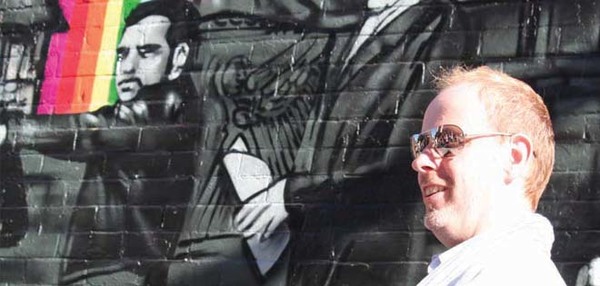
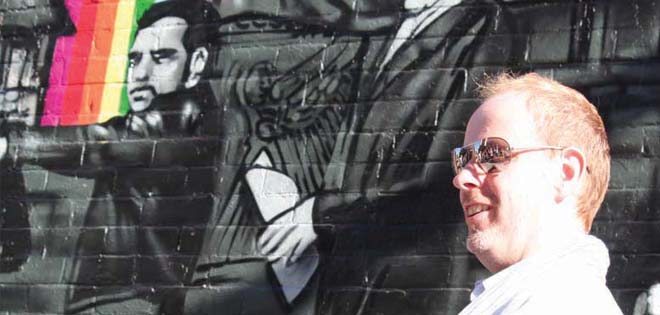
So maybe when you walk by the “We Demand” mural that The Village commissioned on Gladstone and Bank Streets, you might get a sense of what that community looks like and is for, and clap your fairy hands for Glenn Crawford. Photo by Noreen Fagan


A graduate of l’École de danse du Québec in 1989, Harold Rhéaume first worked with Danse Partout (Québec) before joining the ranks of the prestigious Dance Lab Group in Ottawa. Under the guidance of Peter Boneham, he began exploring the fundamentals of dance performance and choreographic creation. He settled in Montréal in 1993 and rapidly gained recognition. In 1997, La Presse newspaper said that "…when he dances, Harold Rhéaume radiates such intensity that he seems larger than life, …he is among those who dance to say things and move you." Like Robert Lepage, Rhéaume returned to Québec city, founding his company Le fils d’Adrien danse (his father’s name) in Saint-Roch, which was at the time transforming into a culturally vibrant neighborhood.

With his humanism as well as his interest in clarity of intent, Harold Rhéaume distinguishes himself from other formal and conceptual trends. His pieces are inventive and refined without ever being pretentious. Inspired by day to day life, Rhéaume works from instinct and spontaneity and has a wide spectrum of influences including musicals, theater, painting, modern architecture, jazz and contemporary music. He also distinguishes himself in having his dancers be part of the creative process. Their personalities and personal experiences, and even their limits, are of much importance in shaping the shows.

Openly homosexual, the choreographer responds with humor when a journalist asks him if all contemporary dancers are gay : "That is wholly exaggerated. I’d say 90%!"

In addition to the choreographic work with his own company, Harold Rhéaume has worked with Cirque du Soleil and contributed to theater, cinema and opera. He is a teacher of physical expression at the Conservatoire d’art dramatique de Québec, as well as choreographic creation at l’École de danse de Québec and l’École de danse contemporaine de Montréal.

RSS Feed

Subscribe

Categories

Tags

Latest Posts

Archives