Nothing seems to dampen the enthusiasm of entrepreneurs Sébastien Després and Heather Wright (photo), the owners and shareholders of Shediac Wonderland. After the Auberge Le Griffon, the Moque-Tortue restaurant, and the Adorable Chocolat café-chocolaterie, they are now embarking in 2024 on the revival of the Neptune drive-in theater, its canteen, and have become concessionaires of the Parlee Beach canteen at Pointe-du-Chêne Provincial Park.
The announcement of the drive-in reopening on May 17 received positive feedback from the community and the region. “This addition to our collection of Alice in Wonderland-inspired establishments will keep its historic name (Neptune) while adopting the imaginative fantasy that has made Shediac Wonderland renowned, our company that oversees all these establishments,” say Sébastien and Heather. In this spirit, the drive-in and beach canteens will be named Morse et Marteaux.

The drive-in and Parlee Beach canteens will be called Morse et Marteaux
A Wood-Fired Meat Smoker
Additionally, Sébastien Després dreamed of a Texan-style meat smoker to supply his Moque-Tortue and Adorable Chocolat kitchens. After visiting numerous places that used such a smoker, he decided to build his own with one of his artisan-handymen. Installed at the drive-in canteen from May, it will be used to smoke wood-fired chicken and beef, which will be served at both canteens as well as in his two Shediac restaurants.
This type of equipment sells for around $30,000 in specialized businesses. The Acadian entrepreneur plans to use the experience of this first model to produce a second one that will be mobile and used to offer smoked meat barbecues from fall 2024. He already has orders for such activities at major events.
Thus, the menus at Moque-Tortue and the Adorable Chocolat café-chocolaterie will be modified to include smoked meat dishes. The second floor of Moque-Tortue will be freed from its sweet products kitchen to accommodate the meat preparation for all the establishments. Similarly, all sweet product production will be centralized in the Adorable Chocolat kitchen.
“The Neptune opportunity goes beyond just a drive-in accommodating 350 cars and screening films projected with an ultra-modern 4K projector. We saw it as the perfect opportunity to add equipment that will enhance the on-site dining offerings, as well as those of our other restaurants,” explains Sébastien Després.
An Anticipated Cinema Season
From May 10, the Neptune drive-in will welcome its first moviegoers in two years. This popular spot for several decades is already delighting many outdoor cinema enthusiasts, come rain or shine. Not to mention that evening activities are few in Shediac during the summer.
Visitors will enjoy quality sound technology via the FM band of car radios. Contracts signed with a dozen distributors will allow exclusive screenings of new releases as well as classic films that people love to rewatch during the peak tourist season. Occasionally, themed weeks will be presented, along with a big Halloween party at the end of the season. Moviegoers are expected to arrive early in the evening to enjoy the new culinary offerings while ensuring a prime spot for the screening starting after sunset.
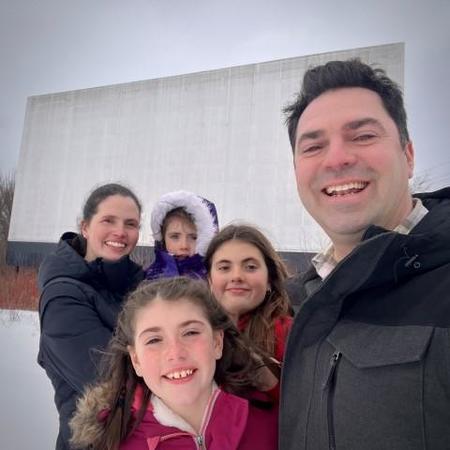 Sébastien, Heather, and their children.
All these transformations in the Shediac Wonderland universe mean that the company will manage more than 75 jobs over the coming months. Moque-Tortue boasts a quality kitchen team that delights its owner and will allow for the creation of new dishes, such as meat pies, among others. For the Adorable Chocolat café-chocolaterie, preparations are underway to offer a bar service.
Sébastien Després explains that he is confident that 2024 will mark a major turning point for Shediac Wonderland. Is he worried about facing significant challenges? “If I can't be the best in the region at what I do, I don't do it,” he answers without hesitation.
Neptune Drive-In
neptunedrivein.ca
506 351-0367
691 Main Street
Pointe-du-Chêne (Shediac), E4P 4Z9
Cantine Morse et Marteaux
parcsnbparks.info
506 351-0367
Parlee Beach Provincial Park
45 Parlee Beach Road
Pointe-du-Chêne, NB E4P 8V5
Shediac Wonderland
thewonderland.ca
506 351-0367
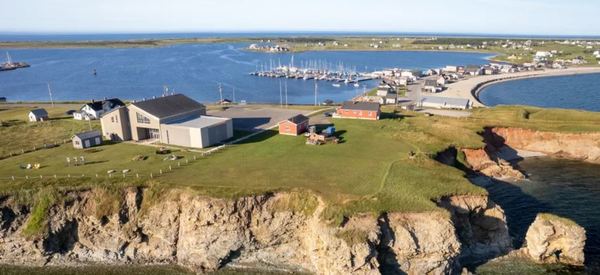
The Musée de la Mer in Havre-Aubert, located at Cape Gridley on the historic site of La Grave in the Magdalen Islands, is perched proudly on one of the region's most stunning vantage points. Since moving to this location in 1974, after spending its early years in the former parish hall of Havre following its 1969 founding, the museum has played a leading role in preserving the maritime and cultural heritage of the islands.
This mission is carried out through research, conservation, public education, and showcasing the unique insular identity that shapes life for the people of the Magdalen Islands.
For those who love striking features in museums, a highlight greets visitors in the main hall of this expanded and renovated building (completed in 2011): a whale skeleton suspended dramatically from the ceiling.
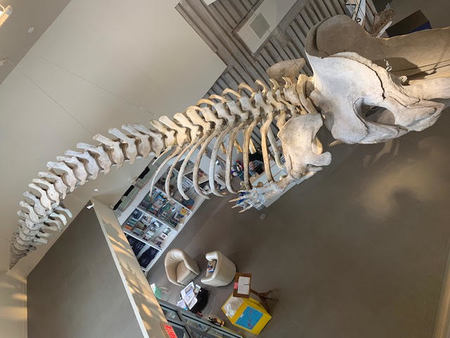
A historical note: In May 2008, a sperm whale washed ashore near Pointe-aux-Loups. After confirming its death, a group of Magdalen Islanders decided to exhibit the skeleton at the museum. Led by Claude Bourque, Pierre-Henry Fontaine, and Paul Grégoire, along with 20 other volunteers, the group spent three days dissecting the carcass. The bones were meticulously cleaned and numbered, and after over six years of preparation, the 215 bones were reassembled and installed in the museum’s main hall in December 2014.
Since late 2022, Gabrielle Leblanc has been the museum's director. She continues the work of its founder, Father Frédéric Landry, who led the museum for over 30 years. With a background in political science, literature, and project management, Ms. Leblanc has been active in the cultural and heritage sector for many years. From 2008 to 2021, she served as supervisor of cultural activities and as a cultural heritage and library coordinator for the Municipality of the Magdalen Islands.
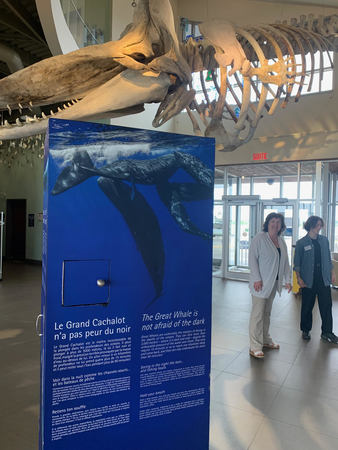
On August 8, 1969, the Museum of the Islands was inaugurated in the presence of Quebec Premier Jean-Jacques Bertrand. In 1972, the museum relocated and was renamed Musée de la Mer. The Quebec government provided a $200,000 grant to construct a dedicated building for the museum.
Engaging Exhibitions and Captivating Activities
"The Musée de la Mer provides an immersive experience into Magdalen culture through its year-round exhibitions and activities. Visitors can expect a warm welcome from our inspiring and passionate staff, as well as outstanding permanent and temporary exhibitions suitable for the whole family," says Gabrielle Leblanc.
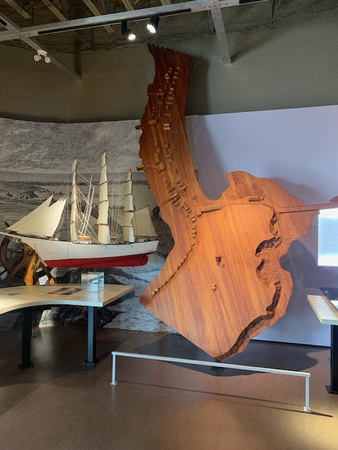
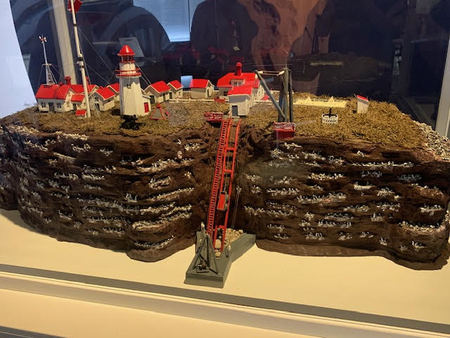
The permanent exhibition "Living on the Islands, Living the Islands," along with rotating displays featuring local artists, genealogical resources, maritime artifacts, and lectures, awaits the many visitors each year. Topics range from fishing traditions to shipwrecks, offering something for both locals and tourists.
From May to October 2023, visitors can explore Annie Morin’s multidisciplinary exhibit, "A Walk on the Ocean Floor." This stunning showcase features sculptural and pictorial works inspired by the organic forms of the ocean and the interplay between its fragility and strength.
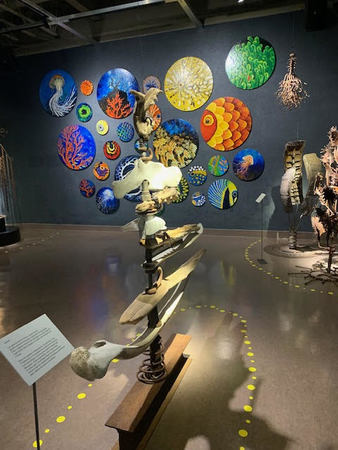
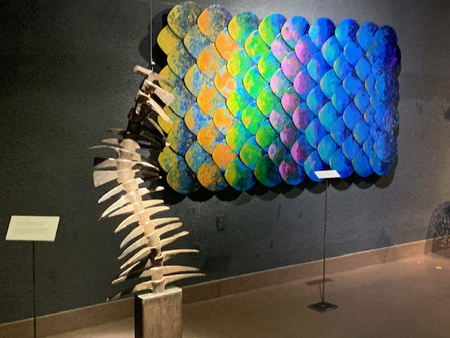
A notable event occurred in February 1971 when the museum hosted the exhibit "The Moon Lands on the Islands," featuring moon rocks brought back by Apollo 11 in 1969.
In July 1987, the Islands Aquarium was inaugurated in the historic Saltworks building at La Grave. It showcased the flora and fauna of the Gulf of Saint Lawrence. Although its focus shifted in 2017, the building now features a second-floor exhibition on La Grave’s history and cultural activities on the ground floor during summer. Experts are working to secure the 1895 structure to preserve its heritage.
The Musée de la Mer is a non-profit organization managed by a board chaired by Normand Thellab. It employs a multidisciplinary team and hosts researchers in archaeology and forensic anthropology each summer.
Musée de la Mer
museedelamer-im.com
1023, chemin De La Grave
Havre-Aubert, QC G4T 9C8
418 937-5711
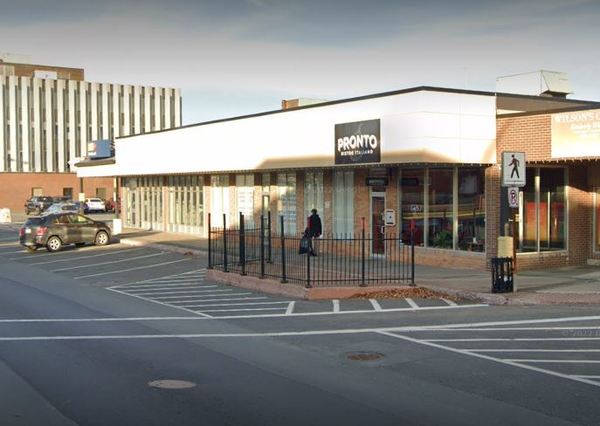
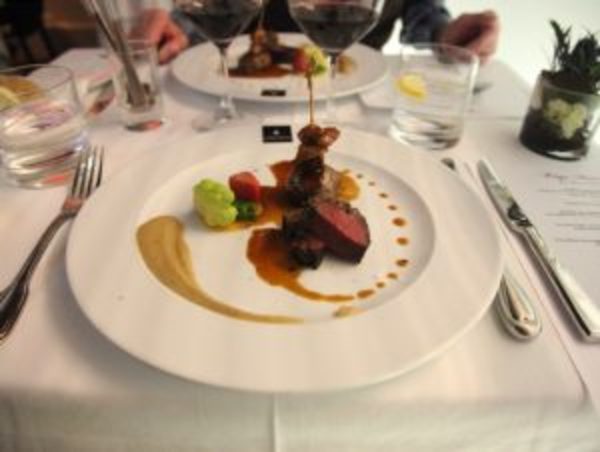
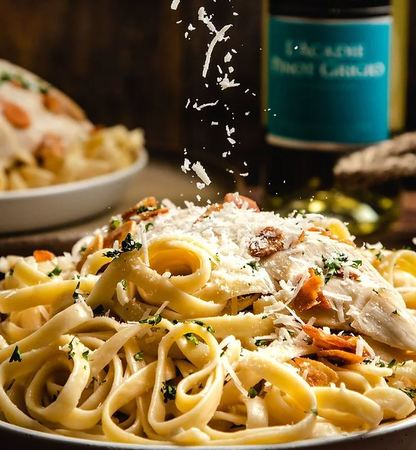
Founded with the simple concept of bringing an Italian bistro-style restaurant to Campbellton, Pronto offers dishes such as delicious appetizers, salads, and pasta, not to mention a well-stocked drink menu. It also serves the famous fresh pasta from L'Atelier Gourmand.
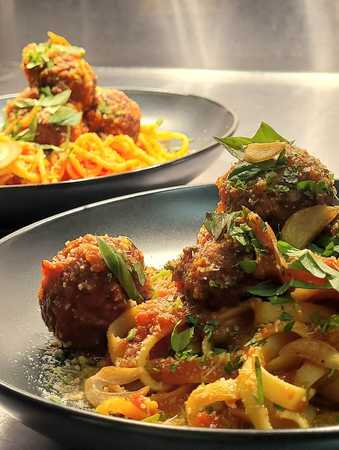
The owner, Keegan Rose, opened his restaurant in July 2022, and it is already recognized among the city's top-rated by critics and customers. He has been working in the restaurant industry since reaching adulthood. Having had the opportunity to open his own restaurant, he jumped at the chance.
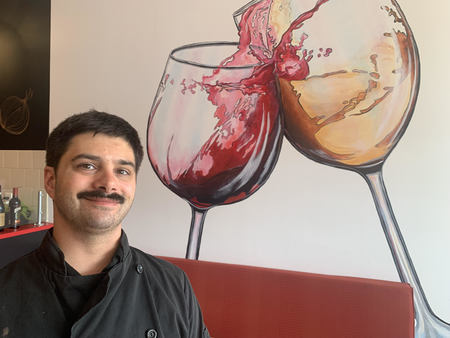 The owner, Keegan Rose
In fact, he occupies the premises that the restaurant where he previously worked had left vacant when it moved elsewhere. A well-located and very busy place in the heart of the city, surrounded by many local businesses and very close to the Interprovincial Bridge leading to Quebec.
His initial project: to offer only Italian food at affordable and reasonable prices. He certainly believes it is possible to find it elsewhere in the city. But he points out that at his place, it is authentic and different from others. "Campbellton was missing this kind of place," he asserts. He personally trains the cooks who prepare the dishes that are the basis of his inspiration. Apart from the Italian menu, there is an interesting wine list featuring local and renowned products, as well as beers.
Pronto can accommodate about 40 people inside. A terrace outside in good weather allows for an additional fifteen or so. About 10 people find employment there.
While still in his thirties, he never thought he could own his own restaurant before his fifties. Having returned to Campbellton a few years ago, after working for some time in Calgary, for a restaurant chain in Rothesay, and having obtained his "red seal" chef certificate in Moncton, Keegan now felt ready to take the plunge.

Pronto is open from Tuesday to Saturday, for lunch and dinner. It is noteworthy that the owner and staff can provide service in both French and English. Taking great care of customers is part of his concept. And it seems to be working. It is advisable to book in advance to secure a table on weekends.
Pronto – Italian Bistro
prontocampbellton.com
99, Roseberry St
Campbellton (NB) E3N 2G6
506.753.5000
Long renowned throughout the 20th century for shipbuilding, when large vessels would depart to transport timber overseas, Shippagan also saw significant growth in its fishing industry, ultimately becoming New Brunswick's most important fishing center.
It's no surprise that each year, Shippagan invites friends to celebrate at the New Brunswick Fisheries and Aquaculture Festival, which draws thousands of visitors. Today, it's the peat bog exploitation industry that is experiencing significant growth in the town and regional economy, creating hundreds of jobs.
The University of Moncton operates and manages a campus here, where hundreds of students from various regions and abroad complete programs such as a Bachelor's in Sustainable Development and Coastal Zones, Information Management, Nursing, Technology, Information and Leadership, as well as Diplomas in Business Administration and Health Sciences, among others.

Located slightly off the beaten path, about 15 km from Highway 11 which connects Caraquet, the regional capital, to Tracadie-Sheila, the town of Shippagan offers an abundance of outdoor activities, whether it's camping, kitesurfing, sailing, cycling, sea swimming, or simply relaxing on sandy beaches.
Situated between Saint-Simon Bay and the channel of Chaleur Bay leading to the Gulf of St. Lawrence, Shippagan presents magnificent landscapes that can be discovered through its numerous cycling circuits and the shoreline trail that runs behind downtown. Additionally, the Acadian Peninsula Véloroute provides access to the entire Peninsula and features rest areas along its route.

Shippagan houses the New Brunswick Aquarium and Marine Centre. Beautiful aquariums showcase the rich collection of fish and invertebrates from the Gulf of St. Lawrence. Several grey seals are also on display, and visitors can touch seafood and other marine creatures.
The Haut-Shippagan area features a truly unique resort destination: Cielo Glamping. Guests can sleep in fully equipped domes, complete with a terrace and spa, offering direct access to the bay. It's one of the premier spots to disconnect while fully embracing everything nature has to offer. Come share a meal at its Hub where the chef prepares dishes using local ingredients, enjoy coffee from the roastery, or savor a local beer.
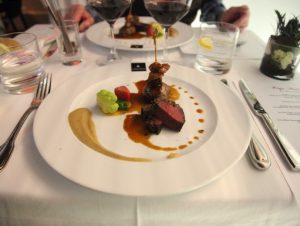
Old Québec is the most popular tourist destination in Québec and features many of the greatest restaurants in the city. In the tradition of Serge Bruyère, many fine chefs in Québec are found in Québec city. Let us mention Jean-Luc Boulay (Le Saint-Amour and Chez Boulay), Arnaud Marchand (Chez Boulay), Daniel Vézina (Laurie Raphaël) and Louis Pacquelin (Panache) among others. Jean-Luc Boulay and Arnaud Marchand from Chez Boulay offer the experience of northern French cuisine while highlighting typical local products. It is located on the ground floor of the elegant Manoir Victoria, on Saint-Jean Street. Close by, Mr. Boulay also presides over the kitchen activities at Saint-Amour, a prominent figure of Québec’s gastronomic scene. Moreover, Saint Amour appears in Trip Advisors’ top 10 fine dining restaurants and it is not unusual to spot a celebrity seated there.
Situated in an old 18th century warehouse in Vieux-Québec and part of the Auberge Saint-Antoine, the restaurant Panache offers the refined menu of chef Louis Pacquelin. While there, you can discover the artefacts showcased on the walls of the building, recalling the rich history of the French colony.
Tourists will also appreciate Les Anciens Canadiens, a restaurant established in a heritage building, where you can discover or rediscover some of the classics of traditional Québec cuisine. Near Château Frontenac, the Continental is renowned for its flambés. Close by, Le Parmesan offers delicious classics of Italian cuisine
Vieux-Québec and Vieux-Port
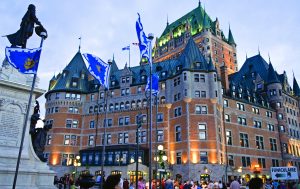
Walking in the streets of Vieux-Québec is like following in the steps of the pioneers who gave birth to this nation. Founded by Samuel de Champlain as a trading post in 1608, the colony first developed around l’Habitation de Québec before expanding into the first streets traced around the Place Royale in the heart of the Vieux-Port. Restored in the early 1970s, this historical district brings us back in time to the capital of Nouvelle-France (New France) at the end of the 17th century. This was the era of Louis XIV, a bust of whom adorns the area. As I myself am a descendant of Mathurin Gagnon, who was one of the first merchants of Québec and whose home and retail store were located at the current site of the Sault-au-Matelot park (or Parc de l’Unesco), walking on the cobblestones of these historic sites is like reconnecting with the history of our roots in this country. A few steps away, Place Royale is the main site of the annual Fêtes de la Nouvelle-France, recreating the French colonial era of its original inhabitants.
In the Vieux-Port, one must absolutely visit the Musée de la Civilisation. The neighborhood is home to many gay-friendly establishments, among them the restaurant Marie-Clarisse, which was opened at the foot of the Casse-Cou staircase by nenowned chef Serge Bruyère.
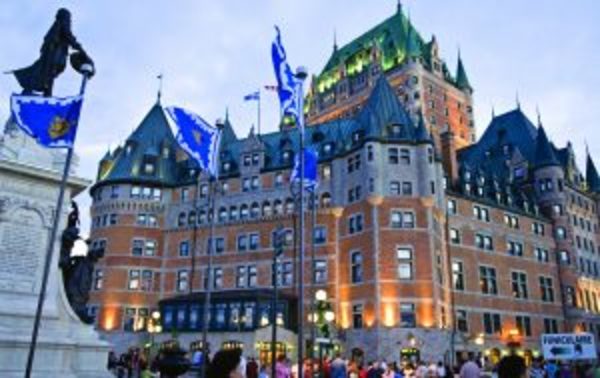
Heading up to Haute-ville, one can admire the elements of fortification which have made Québec unique, for it is the only still-fortified city in North America. It is the neighborhood commonly reffered to as Vieux-Québec. Built at the end of the 19th century near the Citadelle fort, the hotel Château Frontenac rises above Place Royal on one side of the Terrasse Dufferin. The latter is a splendid walkway offering a spectacular view of the area and is perfect for romantic strolls. One can easily understand why the founders of Québec chose this strategic spot to establish the colony, which would become the capital of New France, then Lower Canada and finally, Québec.
The gay lifestyle took root fairly early in Vieux-Québec. The Sauna-hôtel Hippocampe on Mac Mahon Street, the oldest gay establishment still operating in the province (where some might recognize the interiors used for Robert Lepage’s film Le Confessionnal), has been open for over four decades. The owner, Yvon Pépin, had previously tended bar in many Vieux-Québec clubs, in a time when homosexual life was still mostly underground.
André Gagnon
Sillery, Sainte-Foy and Cap-Rouge
Sillery, Sainte-Foy and Cap-Rouge have the reputation of being the more affluent neighborhoods of the capital. This area is home of the main campus of Université Laval, the oldest francophone higher education establishment in America, where the first LGTBQ organization in the capital, the Groupe gai de l’Université Laval, first appeared.
Whether arriving in Québec from the south shore using the highway or the Chemin du Roy, or coming in from the international airport, one inevitably crosses this district before accessing downtown Québec. There are also many hotels in the vicinity of the bridges, especially along Laurier Boulevard. This might be the more practical choices for those coming into the city by car, as the old narrow streets of Old Québec where obviously conceived for horse-drawn carriages and pedestrians, not cars. Shoppers will appreciate the proximity of the shopping malls also found on Laurier Boulevard.
Coming over the bridges from this district, you should visit the Promenade Samuel –De-Champlain park along the river, which was inaugurated in 2008 for the 400th anniversary of the city. Whether arriving by foot, bike or car, the promenade offers a spectacular view of the city and leads right into historic Old Québec. This is a great way to connect with a natural environment in the heart of the city.
Sillery is certainly the most affluent neighborhood of the capital. Its trendiest street, Maguire Avenue, is an area especially appreciated by our community, offering quaint boutiques, with good restaurants and nice terraces. It also features one of the most remarkable parks in the city, Spencer Wood, which became a showcase for horticulture in North America through the efforts of its owner, Henry Atkinson. For nearly 20 years, the governor-generals of United Canada lived on the property, which was purchased by the Québec government in 1870 and served as the residence of Québec lieutenant-governors until 1966. A major fire eventually destroyed the main residence. Visit the gorgeous park by the Saint Lawrence River, the beautiful gardens and relics of the site's long history.
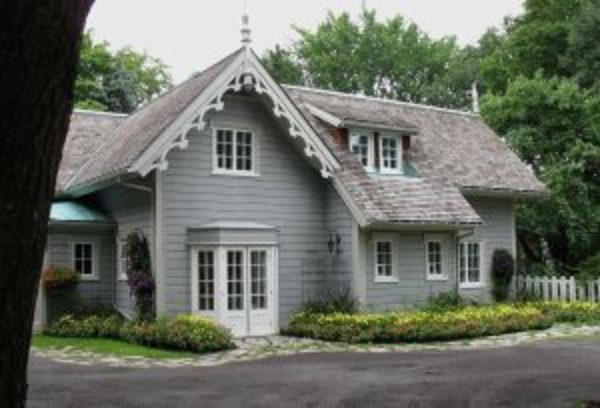
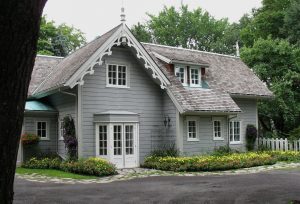
Villa Bagatelle, with its distinctive irregular forms and ornamentations, was built in the picturesque English architectural style of the 19th century. The cultural centre hosts temporary art and history exhibitions. The Villa is also renowned for its garden where you can admire many native plants and a range of underbrush species.
Also noteworthy is the Aquarium du Québec, with its gardens and outdoor tanks, and a main building featuring many exhibition spaces. The venue includes nearly 10 000 specimens representing 300 species of mammals, indigenous and exotic fish, invertebrates, amphibians and reptiles. Watch marine mammals, such as polar bears, walruses and several seal species, frolic in the outdoor park. Many animals from the Pacific Ocean swim in our huge 350 000-litre tank. The area overlooks the Saint Lawrence River from atop a cliff, an excellent way of discovering these faraway regions.
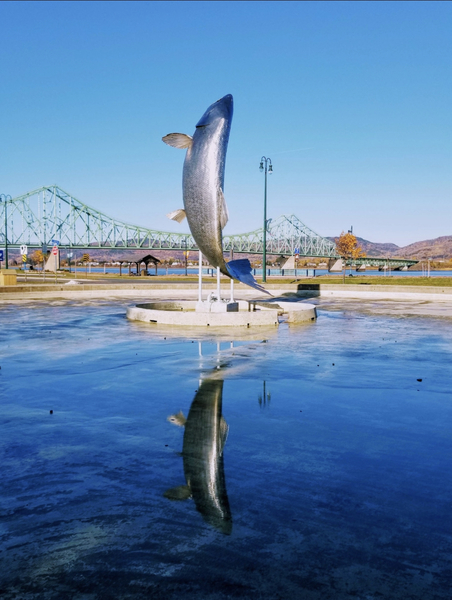
Crossing the Matapedia Valley, one reaches the Restigouche River, into which the Matapedia flows. The Restigouche empties into the Chaleur Bay in the heart of the Appalachians. It is a river globally renowned as a salmon river and part of Canadian heritage. The name Restigouche comes from the Anglicization of Listuguj, the name of the Mi'gmaq community that camped along its banks hundreds of years before the arrival of the first French colonizers. Even today, the community of Listuguj, one of the most significant Mi'gmaq communities in the Maritimes, stands on the Quebec side opposite the town of Campbellton in New Brunswick.
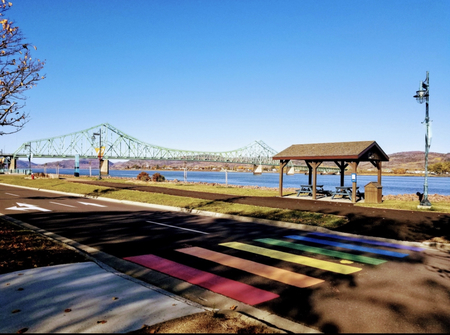
On the right bank of the Restigouche, the newly merged town of Campbellton forms, along with the communities of Listuguj and Pointe-à-la-Croix connected by the interprovincial bridge, the most significant conurbation in the Chaleur Bay with its some 15,000 inhabitants.
The Mi'kmaq called the site Wisiamkik, meaning muddy place, referring to the sediments in the narrows of the Restigouche. The site was named Pointe-des-Sauvages around 1700 during the French colonial era, and a small village was founded there by deported Acadians in 1755, while more than 1,000 deportees settled across in Petite-Rochelle. This significant village only had a brief existence as it was razed under the orders of James Wolfe after the fall of New France in 1760. The site became a mere trading post for decades as the Acadians dispersed and founded various villages around Chaleur Bay. The town truly emerged with Scottish immigration to the region in the early 19th century. The town originally bore various names. The current name was given in 1833 in honor of Sir Archibald Campbell, Lieutenant-Governor of New Brunswick from 1831 to 1837.
Since 2014, Pride has been a growing event. in Pembroke. Pride Walk began when a group of friends decided that the city—and the Ottawa Valley area in general—needed more LGBTQ+ awareness and representation. So, they organized their first Pride event in 2014, a walk through downtown Pembroke with almost 150 attendees. In the past five years, their work has expanded beyond events—organizers recently partnered with PFLAG Renfrew County to bring support meetings to the Ottawa Valley. And events go well beyond the OG walk; last year’s schedule included an inclusive yoga class, Drag Queen Storytime at Pembroke’s public library, an all-ages drag show and, of course, brunch, an overall attendance of a thousand people.
Usually taking place early June, the 2020 schedule is still to be confirmed due to the current coronavirus pandemic.
The territories of the Gaspé and the Maritimes covered in this Guide have been occupied for millennia by the Mi'gmaqs whom the French called Micmacs. Even today, it is the communities of this First Nation that you will meet throughout this territory.
In Gaspé, the symbolic site of the first encounters between French explorer Jacques Cartier and this Aboriginal nation, the Micmac Interpretation Site of Gespeg's mission is to showcase the Mi'kmaq culture of the Gaspé community. Through its interpretive activities, this site highlights the history of the community from 1675 to the present day, offering an authentic and original experience to its visitors. The on-site store offers a range of authentic and quality handcrafted products. It showcases Mi'gmaq craftsmanship as well as other products from native cultures of Quebec.
On the Baie des Chaleurs side, Gesgapegiag attracts many tourists eager to take advantage of the various attractions of this part of Mi'gmaq territory. For tourists coming to tour the Gaspé, it is possible to stop in the community for a picnic in the community park or to admire the tipi that was erected by the sea in 2018.
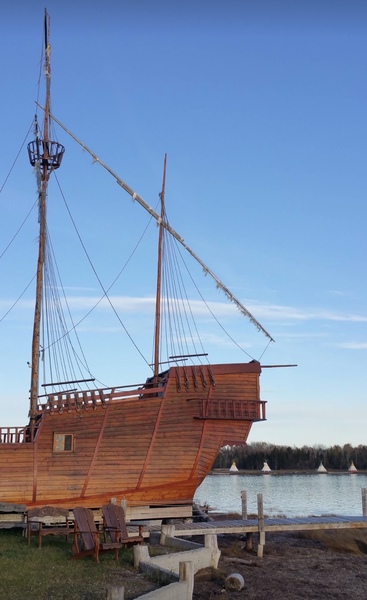
The community of Gesgapegiag has acquired a chalet estate and has set up several tipis in Anse Sainte-Hélène to offer tourists the chance to experience an authentic stay. It is also possible for tourists to stay in the replica of the ship La Grande Hermine, one of the ships used by Jacques Cartier. For hikers and snowmobilers, Le Relais de la Cache is located near the Chic-Chocs mountains.
Every year in July, the community organizes a Pow-Wow, a traditional festival attended by all the Mi'gmaqs of the region and to which all those interested in learning about their culture and traditions are invited. This celebration combines songs, dances, cuisine and traditional stories.