Travel log

coucher du soleil

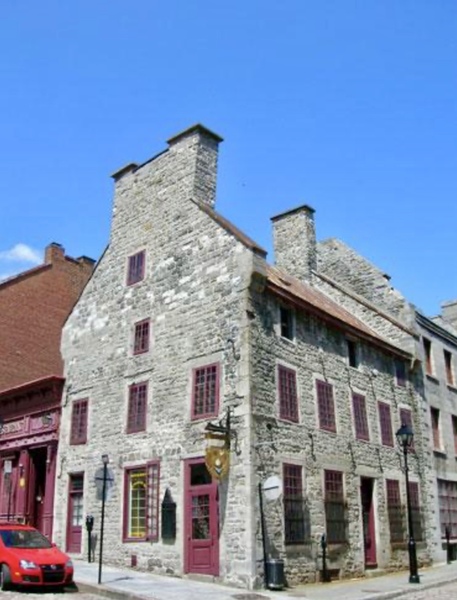
Built along the port, the formerly walled off old city has a gastronomic tradition that goes back to the colony’s beginnings. A time when hostels welcomed visitors from all over the continent and across the Atlantic. The Maison Pierre-du-Calvet, which was constructed in 1771, today still attests to this tradition, as it is the oldest building in Montréal still welcoming visitors and offering them its copious cuisine in the style of 18th century inns. Since that time, the gastronomic propositions have of course evolded and become more diversified – there are many great restaurants to be discovered in historic Old Montréal.

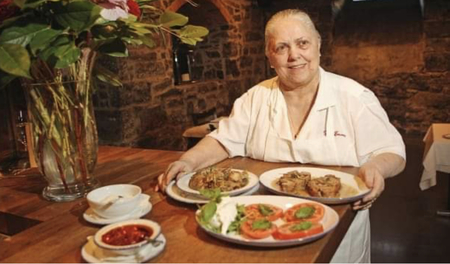
Near Notre-Dame Cathedral, you can begin or end your evening at L’Assommoir, with its trendy atmosphere and emphasis is on products of the terroir. On De la Commune street, just next to the Old Port, Da Emma is à Montréal Classic. From the decor to the plate, everything here transports us to Italy. More specifically, to one of those dining cellars that you only come across in Rome, which seems almost frozen in time. Located in a basement, the intimate space seats 140, plus another 70 on the terrace in front of the restaurant, weather permitting.


C014670 A 3391 4766 B18 C A1 F9 Cb450 Bdd

At the entrance, the celebrity wall confirms the reputation of the establishment with a numerous photos of stars from all over the world photographed with Emma. White tablecloths, period paintings, stone walls and wooden ceilings… the Italian charm is immediately felt, and most welcome.
With the urban re-development of the Faubourg aux Récollets west of Old Montréal, McGill Street has become a sought-after stretch of great restaurants and bistros from the Old Port to Victoria square. With its warm décor and friendly, laid-back ambiance, Ikanos invites you to rediscover some of the classics of Greek and Mediterranean cuisine, reinvented by the chef and owner Constant Mentzas. The seafood and fish is carefully selected and grilled in wood fire ovens. Located on the site of the old Soeurs Grises nunnery near the Old Port, the Bistro Brasserie Les Soeurs Grises offers a selection of home-brewed beers and a menu composed of local products.

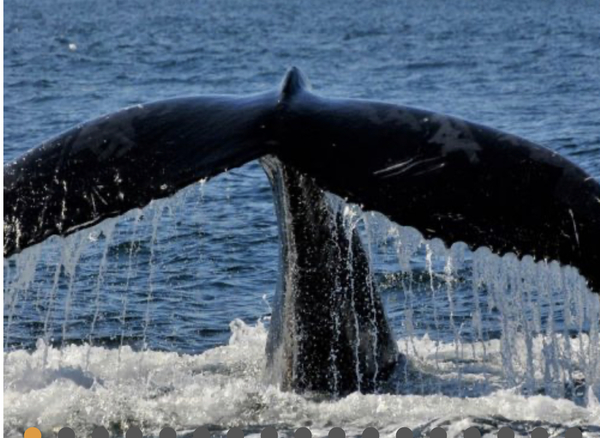
The governments of Canada and Quebec are taking an important step by announcing their joint intention to begin working to expand the boundaries of the Saguenay–St. Lawrence Marine Park. This project aims to better protect the biodiversity and ecosystems of the St. Lawrence Estuary, which is home to nearly 2,200 species, some of which, like the beluga, are in a precarious situation.

The announcement was made today by Steven Guilbeault, Minister of Environment and Climate Change and Minister responsible for Parks Canada, and the Québec Minister of Environment, Climate Change, Benoit Charette.
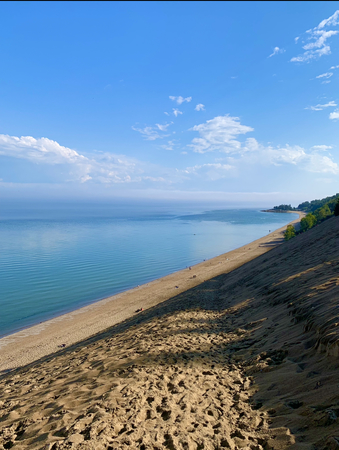
3 Ba08029 F5 F2 4956 9740 9 Fbb4 E294802

Protection of the St. Lawrence beluga

The expansion project's main objective is to protect the critical habitat of the St. Lawrence beluga, of which more than 60 percent currently lies outside the boundaries of the marine park. It also aims to preserve a high-quality feeding ground for several species of whales, some of which are in a precarious situation. In 2020, as a first act of protection by the Government of Québec, and while waiting for a legal status of protection, territorial reserves were set aside with the end goal of eventually creating protected areas. This project would help to consolidate the protection of a significant part of these territories. As currently planned, the project could quadruple the Saguenay–St. Lawrence Marine Park's area.
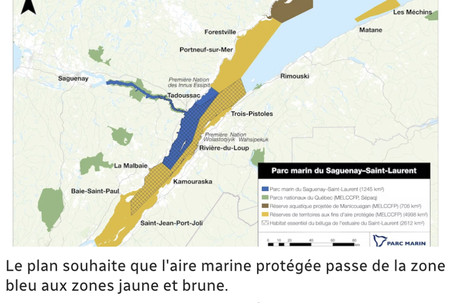
4916 A19 E 0302 4 E5 A 9260 414 C447 Ae6 Ec

Today's announcement is a first step toward expansion of the marine park. In the coming months, the governments of Canada and Québec will jointly meet with regional and municipal organizations, as well as all stakeholders involved in the project, including First nations, research groups and local businesses to exchange perspectives and obtain feedback. Finally, a public consultation phase will be held, during which the proposed limits and the proposed protection measures will be discussed.

Recognized expertise

Backed with more than 25 years of Canada-Québec co-management and participatory governance in the region, the marine park is a unique model for collaboration and partnerships for the conservation of the marine environment. The expertise of its coordination committee and its teams in the fields of marine activity regulation, education, awareness, visitor experience and scientific research makes it a privileged protection tool, mainly for marine mammals, adapted to the context of the St. Lawrence estuary and the Saguenay Fjord.
7 Cd15891 99 F3 415 F 81 D7 B5741 B67 E59 E
The governments of Canada and Quèbec recognize that the protection of an environment as extensively used as the St. Lawrence Estuary requires strong joint cooperation, close collaboration with all members of the Saguenay–St. Lawrence Marine Park Coordination Committee and consultation with a multitude of regional stakeholders.Quotes:

''As a joint Québec-Canada marine protected area, the Saguenay-St. Lawrence Marine Park has a 25-year history of collaborative conservation and public education successes. Its expansion will allow our governments to work together on several shared priorities, including the protection of marine biodiversity and the recovery of species at risk such as the St. Lawrence beluga. This collaboration between our governments is a clear sign that protecting biodiversity and endangered species is a shared priority. At COP15, we made ambitious commitments, a"nd today we are taking an important step towards achieving these goals."  Declares S teven Guilbeault, Minister responsible for Parks Canada

"The Saguenay–St. Lawrence Marine Park is a source of national pride and a true natural jewel of Quebec. The Government of Québec is proud of this unique partnership with the federal government, which will improve the protection of marine mammals living in the Saint Lawrence Estuary, such as the beluga, which is an emblematic species of the fragility of this habitat. The knowledge gained in recent years sends a clear signal of what we must do to protect it. With extensive experience in co-management and participatory governance, the Saguenay–St. Lawrence Marine Park is a model for protecting marine environments that promote sustainable tourism and benefit local communities. I am convinced that the leadership, experience and trusting relationships that have been at the heart of the park's management since its inception will be catalysts for the next steps toward this promising expansion project for our nation!"

Added Benoit Charette, Québec Minister of the Environment, the Fight against Climate Change, Wildlife and Parks

Highlights

Concerns about the decline of the beluga and its habitat were a determining factor in the creation of the Saguenay–St. Lawrence Marine Park (SSMP) in 1998. The SSMP is a unique Québec/Canada joint marine protected area created by Québec and federal legislation, the Saguenay–St. Lawrence Marine Park Act.
With a current surface area of 1,245 square kilometres (km2), the SSMP is located on Quèbec public lands at the confluence of the Saguenay River and the St. Lawrence Estuary. Its mandate is to enhance the level of protection of the ecosystems of a representative part of the Saguenay Fjord and the St. Lawrence Estuary for the purposes of conservation and environmental protection of the exceptional flora and fauna and natural resources found there, in addition to promoting sustainable educational, recreational and scientific activities.
The management of SSMP, under the joint responsibility of the Ministère de l'Environnement, de la Lutte contre les changements climatiques, de la Faune et des Parcs, of the Société des établissements de plein air du Québec (Sépaq) and Parks Canada, is based on a participatory governance approach that is unique in Canada and relies on stakeholders working together at the local, regional and national levels to achieve its objectives. Its coordination committee is composed of representatives of the Essipit Innu First Nation, the Wolastoqiyik Wahsipekuk First Nation, the Charlevoix-Est regional county municipalities (RCM), the Saguenay Fjord, la Haute-Côte-Nord, and representatives of the three southern shore RCMs (des Basques, Rivière-du-Loup and Kamouraska), the scientific community, and the interpretation and education community.
Since the creation of SSMP in 1998, significant efforts have been made by the involved parties to preserve marine mammals, including beluga. However, its population has continued to decline since then, at a rate of about 1% per year. It now has fewer than 900 individuals. Since the 2000s, there has been a critical and unexplained increase in mortality among newborns and females of reproductive age, which suggests an acceleration of the beluga's decline in the coming years.


You can’t talk about Mile End gastronomy without talking about Montréal’s Jewish and Eastern European heritage. It is the centre of the emblematic institutions of this legacy in the city, where immigrant Jews, most of them from Eastern Europe, brought us the bagel, the smoked meat sandwich and cured sausages in the early 20th century. In Mile End you’ll find the two temples of bagels that are Fairmount Bagel and Saint-Viateur Bagel. The story goes that the Montréal bagel is sweeter and more delicate than its New York cousin, a probable result of adapting to local taste. Try out a sausage sandwich at Wilensky’s on Fairmount Street. Smoked meat fans will definitely want to wait in line to try Montréal’s famous smoked meat sandwiches at the restaurant Schwartz on St-Laurent, just south of the Mile End.

B & M brunch
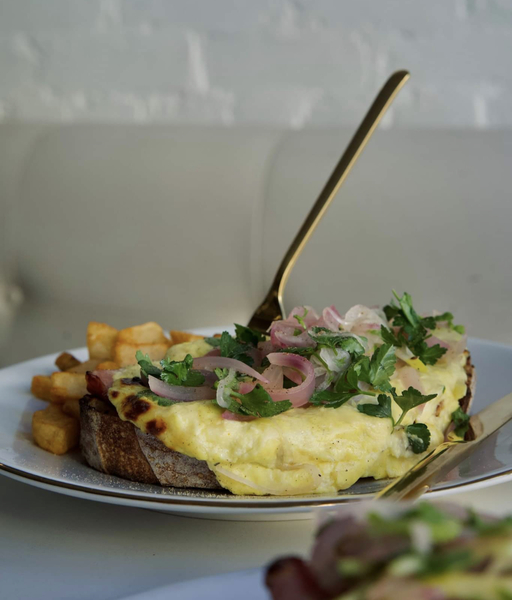
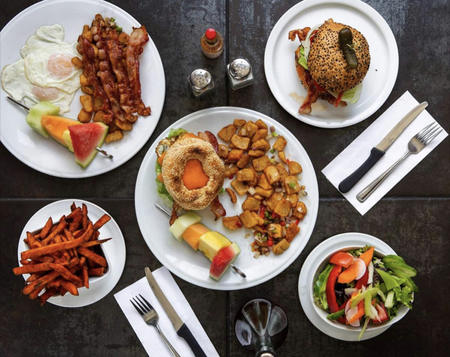
The specialties of bagels and sandwiches associated with the Mile End neighbourhood are most probably linked to its being a favoured brunching destination. This tradition has been well established by the restaurant Beauty’s on Mont-Royal Avenue, where bagels are a specialty. Restaurants such as B & M or Fabergé, located on St-Viateur and Fairmount respectively, offer their own updated version of the Mile End brunch. The Syrian restaurant Kazamaza on Parc Avenue even proposes a Middle Eastern version of it.

The multiethnic character of the neighbourhood is, of course, also reflected in the more refined eateries of the area, with some fine cuisine from all sides of the Mediterranean basin. In the intimate décor of bistro Barcola on Parc Avenue, you will discover authentic Northern Italian cuisine. At the limits of Outremont on the corner of Van Horne and Hutchison, the Caffé Della Pace prepares a variety of Italian coffees and offers healthy, homemade vegetarian dishes composed of fresh ingredients. The prices are very reasonable and the atmosphere is friendly, with a piano in one corner and sofas in another. Both families with children and queers rub shoulders here. The fancy bistro Chez Lévêque on Laurier West has remained a very popular spot for the past 45 years. There is a humorous, slightly irreverent tone here, and a religious theme is displayed in reference to the patronymic of chef and co-owner Pierre Lévêque (L’évêque meaning Bishop). This chic Parisian brasserie with a distinctive Montréal touch has never deviated from the concept that made its success: good food and wine, in a trendy but casual ambiance. Their “faim de soirée” menu becomes available after 9pm, with more affordable prices attracting a younger clientele.

Of course, this neighbourhood’s culinary spectrum is much larger than what we can possibly cram into this page, and Local Montréal Tours can design customized gourmet tours that allow for rich and diverse Mile End discoveries.

In the estuary of the Restigouche River, at the end of Chaleur Bay, lies the national historic site of the Battle of the Restigouche, 3 km west of the municipality of Pointe-à-la-Croix. This historic site commemorates the last naval battle of the Seven Years' War between the French and English for possession of New France…

But it was also near this site, to the east of Pointe-à-la-Croix, that over a thousand Acadians fleeing deportation took refuge, in what was called in 1758 the village of Petite-Rochelle. At the time of the fall of Quebec in September 1759, the village was only defended by a fortified post and a handful of soldiers. Under the English threat, this Acadian refuge was nevertheless the last French bastion to capitulate. Here's why…

The last naval battle

At the end of May 1760, the Petite-Rochelle post received unexpected aid. The winter had been harsh, and the population had suffered greatly from famine. A French flotilla commanded by Lieutenant François Chenard de La Giraudais took refuge at the end of Chaleur Bay. Comprising the frigate Le Machault and two supply ships loaded to aid Canada, they had preferred to avoid encountering a larger English fleet that preceded them at the entrance of the Saint Lawrence River. On June 27, the three French ships were trapped by an English fleet of five warships commanded by Captain John Byron, who engaged in battle. The defense of the Petite-Rochelle post, however, was organized and supported by Acadian militiamen and Mi'kmaq warriors. François-Gabriel d’Anjeac, captain of the troops aboard the French ships, had taken command of the post and directed the construction of a battery and a guard post at Pointe-à-la-Garde (east of Pointe-à-la-Croix). This battery caused real damage to the English and delayed their progression towards the French ships. But the fight was uneven…

Estuary of the Restigouche River and Van Horne Bridge
Estuary of the Restigouche River and Van Horne Bridge connecting Campbellton to Pointe-à-la-Croix, viewed from Sugarloaf Mountain, New Brunswick. It is here that remains of the Machault still lie at the bottom of the river (author Blob5825, unmodified, license CC BY 1.0)
On July 8, at the end of a fierce battle, La Giraudais scuttled his ships to prevent the English from seizing the supplies and weapons. Quickly, Captain d’Anjeac led the retreat of his troops into the woods. However, the English fleet preferred to withdraw. Thus ended the battle of the Restigouche. The English had burned all the houses they found on the shore. The disaster was total. D’Anjeac still managed to organize the resistance of the Petite-Rochelle post, which still sheltered a thousand Acadian refugees. It was in vain… The French troops had to lay down their arms on October 30, after the capitulation of Montreal. The Acadians were left in place, plunged into great uncertainty, which did not prevent the Acadian privateers from continuing a relentless privateering war against the English boats. Several families had still managed to flee along Chaleur Bay and had founded the village of... Bonaventure.


By Gaëtan Vaudry

Tadoussac is arguably one of the most beautiful summer tourist regions in Quebec. However, this North Shore region is much quieter in winter. Fortunately, thanks to our friends at Chalets-camping Domaine des Dunes, it is possible to have very pleasant moments there, even in the winter season!

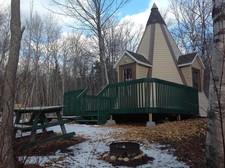
Located between the tourist village of Tadoussac and the famous Dunes (two huge marine sand terraces exposed by the last ice melt about 10,000 years ago), the Domaine des Dunes site, nestled in a birch forest, is simply enchanting. It offers both camping and chalet rentals that can accommodate up to six people, as well as the rental of a kamook and even a wooden tipi... nothing less! "We resume service in winter, to the delight of our customers," says co-owner Bernadette Roduit Bender, with a broad smile. "The experiences in kamook and tipi are done in camping styles, that is, with access to a sanitary facility with toilets and showers, washer and dryer, as well as a community room."

Domaine_Dunes2 Domaine_Dunes3 Domaine_Dunes4

Several activities are available even in winter at Domaine des Dunes, including a highly appreciated welcome for snowmobile enthusiasts in the boreal forest, trails for snowshoeing and cross-country skiing. In summer, the region abounds with activities, including whale watching cruises, black bear observation, sea kayaking, marine mammal interpretation center, the region's fine dining, and much more.

Bernadette, who is joined by her daughter and son for all aspects of Domaine des Dunes, has worked very hard in recent weeks to welcome you this winter. During my short visit to Tadoussac at the end of November, the family was busy making final adjustments to welcome numerous clients for the beautiful winter season. Moreover, Bernadette and her team invite you to book your chalet, kamook, or wooden tipi for the holiday season before December 10th. They even promise a nice surprise!

Domaine des Dunes (Chalets-camping)
585, Chemin de la Rivière-du-Moulin-à-Baude
Tadoussac
418 235-4843
domainedesdunes.com


By Gaëtan Vaudry
Photo: Héliotrope Editions

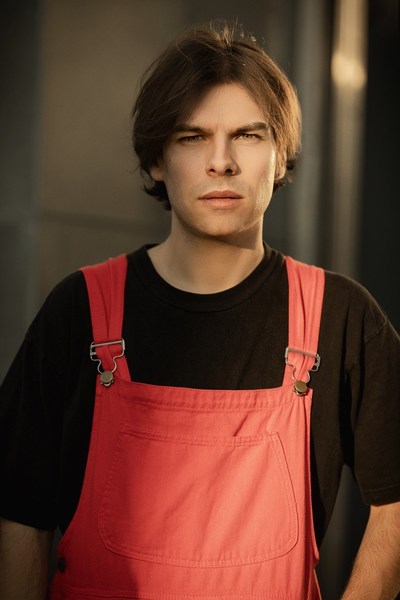
At just 31 years of age, his name is already on everyone's lips. Born in Montreal, but a Chicoutimi adoptee by choice, Kevin Lambert is a prolific author collecting the most prestigious awards.

His mantelpiece is already overflowing with numerous accolades, including the best thesis in Arts and Humanities from the University of Montreal, the Pierre L'Hérault Emerging Critic Award, the Discovery Award at the Saguenay−Lac-Saint-Jean Book Fair, the Sade Prize, the CALQ (Quebec Council of Arts and Letters) Prize, the Ringuet Prize, the December Prize, and the 2023 Médicis Prize... to name a few!

Graduating from the University of Montreal with a master's and a doctorate, the writer published his first novel You Will Love What You Have Killed in 2017. In this story set in an unhealthy and morbid Chicoutimi, Kevin Lambert uses hatred as a literary tone and sharply criticizes the xenophobia and homophobia that still prevails in Quebec. The young man already managed to turn many heads, mainly those in the Quebec literary scene. This success set the stage for his second novel, Querelle of Roberval, published a year later. This work - renamed Querelle by his French publisher - narrating the struggle of the workers at the Roberval sawmill against their employer, received a multitude of awards and acknowledgements, propelling Kevin Lambert's name beyond our borders.

KLAMBERT2

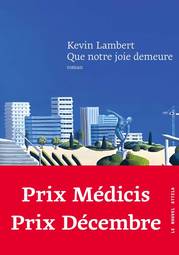
Many will remember that in July 2023, Kevin Lambert did not appreciate Quebec's Prime Minister, François Legault, highlighting his latest work Let Our Joy Remain on Twitter. The author fiercely replied to the CAQ leader's literary critique on social media: "Mr. Legault, in the midst of a housing crisis, while your government works to undermine the last bastions protecting us from extreme gentrification in Montreal, promoting my book is pitiful (...) What bothered me was not so much the fact that he reads books that are far from his political ideas or echo chamber, but the interpretation he made of my book in the context of the housing crisis." The two men would subsequently exchange a few messages.

Openly gay, Kevin Lambert, in an interview with La Presse and director René-Richard Cyr in 2021, asserts his desire to contribute to the homosexual affirmation movement in his works: "I like being part of the LGBTQ category," he emphasizes. According to him, the cultural industry imposes changes, adjustments: "Categories don't bother me at all. It's a big machine, the cultural industry, it takes time to move, but it moves.

On November 9, 2023, Kevin Lambert received the Médicis Prize for Let Our Joy Remain, a French literary award established in 1958, intended to honor a novel, a narrative, a collection of short stories, by an author who is beginning or does not yet have a reputation corresponding to their talent. The Médicis comes with a prize of 1000 euros, roughly less than 1500 dollars.

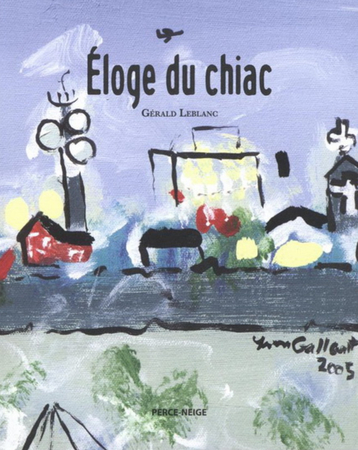
According to many, Gérald Leblanc was a poet of youth and urbanity. On May 30, 2005, the artist succumbed to a long battle with cancer at the age of 59. Originally from Bouctouche, he influenced Acadian cultural life in numerous ways.

Acadia lost one of its most illustrious poets, for whom the search for personal roots served as a springboard for a fundamentally Acadian voice. His poetic language is that of "chiac," the dialect of southeastern New Brunswick, of which Leblanc was the undisputed champion. His poetic voice, rich and abundant, proudly asserts itself without seeking any external validation.

 
Éloge du chiac Gérald Leblanc
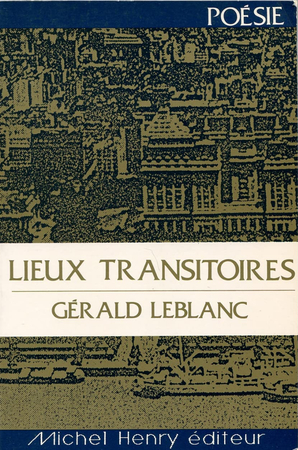
Author of an anthology of Acadian poetry, he stimulated other voices. His poetry poses the following question: "What is Acadian identity?" His literary work is immense, with multiple themes. In 1986, the author celebrated the absolute of love in "Lieux transitoires" and took the opportunity to affirm his homosexuality.

Lieux Transitoires Gérald Leblanc

He led Éditions Perce-Neige in Moncton, a publishing house dedicated to new Acadian literature, from 1991 until his death. During this period, he organized numerous literary evenings and meetings. He was also one of the main lyricists for the group 1755, which made a splash in the 70s. He is credited with several Acadian song classics, some of which were covered by Marie-Jo Thériault.

This prolific and committed man of letters also shared on several occasions what inspired and shocked him. In a long correspondence (Lettres à mon ami américain 1967-2003) maintained with his cousin Joseph Olivier Roy, an American teacher of Acadian origin, comprising 161 letters written over 36 years, he shared his interest in literature and his personal evolution alongside that of Acadia over the years.

He also addresses elements that reveal much about his personality: "Alcoholics, whores, religious fanatics, homosexuals, etc. I have very, very vicious blood flowing through my veins; I have a heritage full of passion, hatred, debauchery, and sin (note that I do not say LOVE, finally, funny race)."

Leblanc states that he has "always loved writing letters" and that Roy was just one among his many correspondents of that time: " […] about fifteen people, ten 'Gay boys,' one lesbian, a few others of these 'normal' beings over the last ten years, if we collected all my correspondence, there would be enough to fill at least 2,000 volumes."

Rodrigue Jean's feature-length documentary "L’extrême frontière" (2006) at the NFB celebrates poet Gérald Leblanc. Combining wandering and belonging, this child of the Beat Generation lived far from all taboos and propelled Acadia into modernity. The film was released a year after the poet's death.

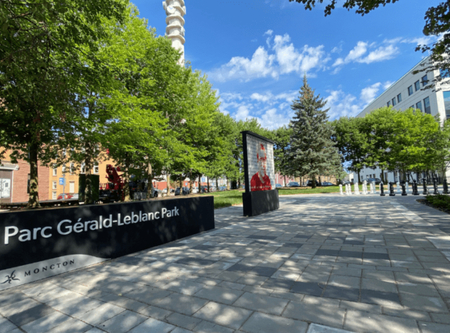
In 2020, at the initiative of two university professors, the City of Moncton inaugurated a park now bearing his name right in front of the city hall.

Parc Gérald-Leblanc Moncton

Early one morning in early May, over coffee at Adorable Chocolat in Shediac, Acadia, his hometown, Julien Cadieux agrees to share a portion of his already extensive experience as a filmmaker, screenwriter, director, and editor.

Cadieux
Quickly, the issue of inclusion arises and almost becomes the central point of this interview. Because for him, that's what motivates his work as a filmmaker: giving voice and exposing the experiences of people who face issues related to their identity, origins, sexuality, interactions with institutions and organizations, social justice, among others.

 
Since 2008, after studying film at Concordia University in Montreal, he has taken on numerous projects and productions, some of which have been awarded and have been highly successful among various communities. "Cinema in Acadia has a real impact on the community. People need to see themselves in cinema. That's what drives me first in my productions," he assures.

Cadieux
He has personally scripted, edited, and directed a dozen productions, most related to Acadian subjects, the best known of which are Y'a une étoile (2023), Daniel Le Tisserand (2023), Farlaques (2021), Métisser une rivière (2020). In Quebec, his documentary Guilda: elle est bien dans ma peau (2014) about this famous Montreal transformist artist of French origin, a true pioneer of sexual diversity for sixty years.

 
Many of these films have been awarded at film festivals here and elsewhere, in Quebec, Canada, and even in France and the United States. It is particularly his queer-themed films that receive greater visibility and recognition. Precisely because they give voice to or highlight specific situations related to members of various LGBT communities.
Julien Cadieux has also contributed to the editing and scripting of about twenty other film or video productions since 2006.

Cadieux With Dan Robichaud, from the film Daniel Le Tisserand


Is there a queer life outside of big cities? To this question, Julien Cadieux responds that it is possible, but that various constraints may discourage those who wish to continue their life in rural areas, for example in Acadia, where LGBT-friendly healthcare services are almost non-existent. Many therefore choose to leave the regions to live in urban areas, such as Moncton, even though not everything is easily accessible there. These are the kinds of issues he addresses in several of his documentaries.


The issue of inclusion particularly interests him. In this context, he is soon to undertake a film about an immigration project in the Cap-Pelé region where many temporary foreign workers from Mexico, Jamaica, and the Philippines, among others, face difficult inclusion situations. The case of LGBT individuals among them is also of concern, according to Julien Cadieux.

Cadieux 
In his film "Y'a une étoile," we meet Samuel Leblanc, a young transgender musician, who embarks on a journey with his friends from the band Écarlate through the work of Acadian artist Angèle Arseneault. Originally from a small village, Samuel has long questioned his queer identity and cultural identity. Through his double minority and the journey of young people like him, we discover that despite the obstacles, "there is a star for each of us."


This film is a very frank evocation of what Julien Cadieux wishes to demonstrate and present in his documentary cinema, in connection with Acadia, queer identity, the reality of the arts that fascinates him, and the human encounters he makes throughout his journey.

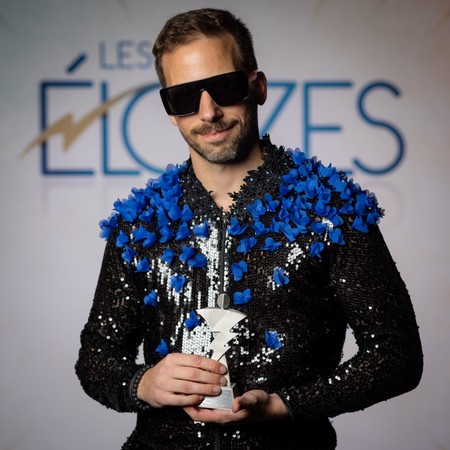
It should be noted that Julien Cadieux was named "Artist of the Year in Media Arts," specifically for the film Y'a une étoile at the Les Éloizes 2024 ceremony, the annual gala of the Association acadienne des artistes professionnel.le.s du Nouveau-Brunswick, in Shediac last Sunday, May 12.

Cadieux Cadieux

Julien Cadieux, filmmaker
Shediac, NB
facebook.com/julien.cadieux


By Gaëtan Vaudry
Photo: Facebook

Summer 2024 will see the release of " The Chef and the Customs Officer ", the new film by Baie-Comeau filmmaker Manon Briand. It will have been 10 years since her last work, " Liverpool ", released in 2012. In an interview with journalist Maxime Demers of the Journal de Montréal, Manon Briand explains that this is the fifth script she has worked on over the past decade and it’s the one that finally led to filming.

The new film by the director of "La Turbulences des Fluides" tells the story of a fame-seeking French chef who tries to help a child win a culinary contest. However, he must face the hostility of an entire village towards the child's mother, the uncompromising local customs officer. The lead role in this comedy was given to French actor Édouard Baer, known for his role as Astérix in "Astérix and Obélix: God Save Britannia". He is well supported by Julie Le Breton, Sylvain Girard, Normand Chouinard, Michèle Deslauriers, and Dominic Paquet: "I treated myself. I included everyone I love", notes the director in the interview.

In 2003, Manon Briand received 4 nominations at the Jutra Awards (now the Iris Awards), including Best Screenplay, for her masterpiece "La Turbulences des Fluides". A decade later, she won the Women in Film and Television Artistic Merit Award at the Vancouver festival, for her feature film "Liverpool".

Sexual Ambiguity

A graduate of Concordia University in Fine Arts, majoring in film, Manon Briand captures the pulse of her generation of trendy urban gays, lesbians, bisexuals – and even heterosexuals – for whom sexual identity is a matter of the heart, in her first work "Les Sauf-Conduits" in 1991, a short film starring Luc Picard and Patrick Goyette. With her first feature film "2 Seconds", the filmmaker presents a deftly crafted melodrama about a washed-up lesbian cyclist who thrives as a bike courier in the worn streets of Montreal. Charlotte Laurier, Dino Tavarone, Yves P. Pelletier, and Suzanne Clément star in this 1998 film.

In the early 2000s, "Heart—The Marilyn Bell Story", an English-language television biography about Toronto marathon swimmer Marilyn Bell, starring Caroline Dhavernas, allowed Briand to hone her directing skills, as well as to further explore her interest in female bodies, athletic challenges, and sexual ambiguity.

Needless to say, the free encyclopedia Wikipedia categorizes Baie-Comeau's Briand in the category "Canadian female directors whose work is marked by LGBTQ themes".

Serge Bruyère

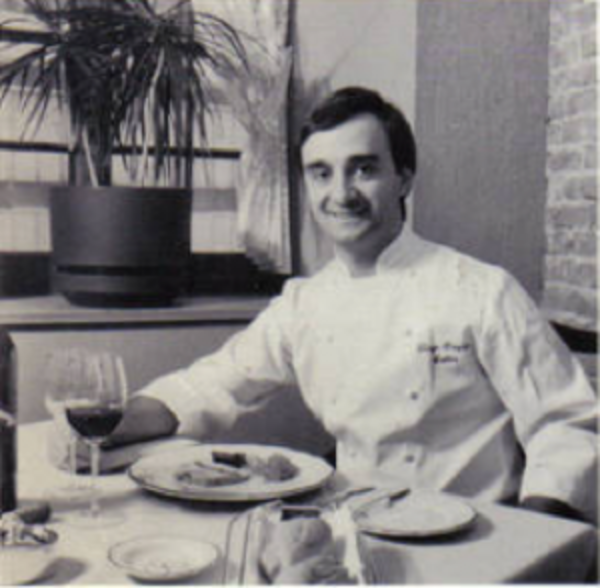
A native of Lyon in France, Serge Bruyère fell in love with the city of Québec from his very first visit in 1976. He immigrated to its province during the Montréal Olympic Games, working at the Queen Elizabeth Hotel before moving to Québec city. Prior to leaving his native country, he had undergone his training in the kitchens of l’Auberge du Tunnel in Auvergne with Paul Bocuse and the Troisgros brothers. He first worked at the Hilton before becoming executive chef at the Éperlan restaurant. One year later, he founded the Marie-Clarisse restaurant near the Breakneck Stairs (l’Escalier Casse-cou) with another partner. In 1980, he undertook a new adventure at the Maison Livernois on Saint-Jean Street, this time on his own: Serge Bruyère’s restaurant À La Table was created. He was among the very first chefs to work closely with local craftsmen in order to obtain high quality products for his menu. Serge Bruyère died prematurely in 1994 at the age of 33. His heritage is considered enormous: he introduced an updated version of haute cuisine, laying the foundations of a gastronomy concerned with great quality and based on a relationship of proximity with his suppliers. Throughout the 14 years of existence of À La Table, Bruyère devoted time and energy in training dozens of competent chefs like Daniel Vézina, Jean Soulard and Marie-Chantale Lepage, who to this day remain inspired by his culinary philosophy.

His passion for gastronomy as well as his devotion to the recognition of the trade were immense. He knew how to transmit his enthusiasm and the importance of working with precision, and also to respect clients and producers. Bruyère is one of only two Québec chefs to be included in the Larousse gastronomique lexicon, and was the first to introduce new cuisine to the city.

He was a humble, sympathetic and respected chef. His passion for quality produce and his unfailing technique and hard work, along with the sharing of his knowledge were of utmost importance to him. The Fondation Serge Bruyère, which is dedicated to the encouragement of Québec’s new culinary talent, serves to perpetuate his legacy.

RSS Feed

Subscribe

Categories

Tags

Latest Posts

Archives